Avigna.AI’s Journey as a Leading Enterprise IoT and AIoT Services Provider in India: Unifying Edge, Cloud, and AI
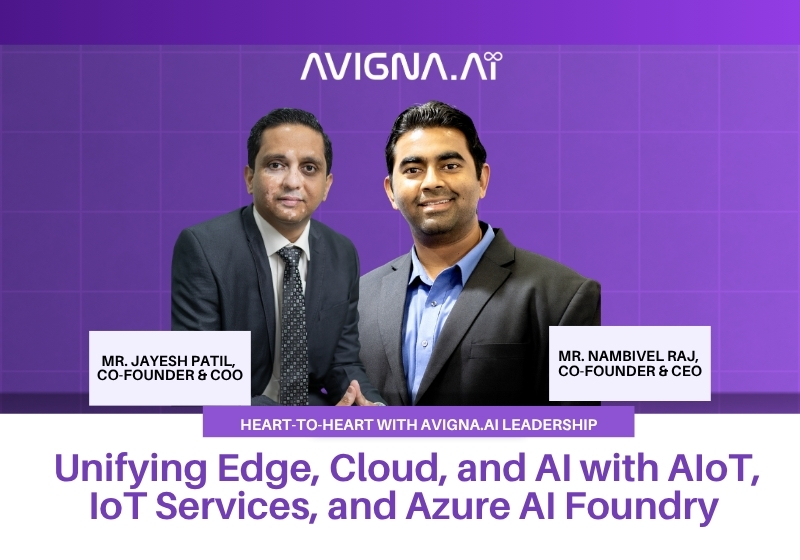
As Eleanor Roosevelt believes, “The future belongs to those who believe in the beauty of their dreams.” In 2020, the tech-savvy, innovative duo – Mr. Jayesh Patil and Mr. Nambivel Raj, envisioned a dream – to build a connected world with the power of IoT. That’s when Avigna.AI was born.
Fast forward, they realized their dream through hard work and passion, delivering excellence at every step to their customers across the globe through Avigna.AI, the leading IoT Services provider in India.
As Avigna.AI celebrates it another corporate anniversary, the Co-Founders Mr. Jayesh Patil and Mr.Nambivel Raj open their hearts as they share their journey, vision, successes and lessons this journey gifted to them. In this article, you will read the tete-a-tete the leaders had with their team on their fourth corporate anniversary. Together, they trust in one vision:
“Industrial IoT, supercharged by AI, is reshaping the very fabric of business. It’s ushering in a new age of real-time insights, predictive capabilities, and effortless communication between devices, data, and systems. Businesses that embrace sophisticated platforms, such as those offered by Avigna.AI, are constructing operations that are not only scalable and efficient but also primed for the future of smart industries.”
Move ahead to learn more insights and get inspired!
Team: Congratulations on your corporate anniversary! Can you tell us about your company’s journey over the past four years and what motivated you to start this venture in the IoT space?
Jayesh: Thank you! It’s like time flies since we founded AvignaAI, and just then, we realized that IoT can change how we can provide more value through our IoT expertise. As we hail with huge hands-on experience in the IoT domain, we comprehended the significant gap between those who specialized in technical stuff and others with whom they are supposed to work hand in hand. Our goal from the beginning was to help businesses get more value from their data through disassembling silos and easy integration of IoT.
Nambivel: During the last four years, our team has been steadily growing. We have augmented our platform capacities to serve many areas and business needs apart from manufacturing. I have been inspired throughout this journey by watching how businesses change when IoT is rightly implemented. This is why we will keep enhancing our platform and solutions as much as possible to ensure we facilitate many businesses’ success in this new era of the connectivity.
Team: What are the key challenges in IoT implementation that you have observed in the HVAC, Manufacturing, and Industrial Automation sectors, and how does your company address these challenges?
Jayesh: One of the most difficult challenges in IoT Implementation is obsolete systems and incompatible devices, which struggle to become part of the interconnected world. It is also important to note that big data from IoT makes no sense without analytics. One should also ensure that security measures are taken. Another challenge is meeting all these requirements while solving the issue where companies cannot find professionals having OT and IT competence. We address data analytics challenges through our built-in capabilities for real-time dashboards, predictive maintenance using machine learning, and workflow automation based on sensor triggers. Our expert team also takes care of IoT Security and fills the skills gap of our customers.
Nambivel: We also see the cost and complexity of custom integrations as barriers for many organizations. Our pre-built and configurable applications and adapters help cut implementation times dramatically versus standalone projects. Our subscription business model makes it easy to get started with IoT and scale solutions within existing IT budgets over time. Ultimately, we aim to encourage new digital possibilities for organizations through their IoT investments.
Team: Your IoT platform Avigna CUBE has won multiple awards. What sets it apart from other IoT platforms in the market, and how does it benefit your clients in Fortune 500 companies?
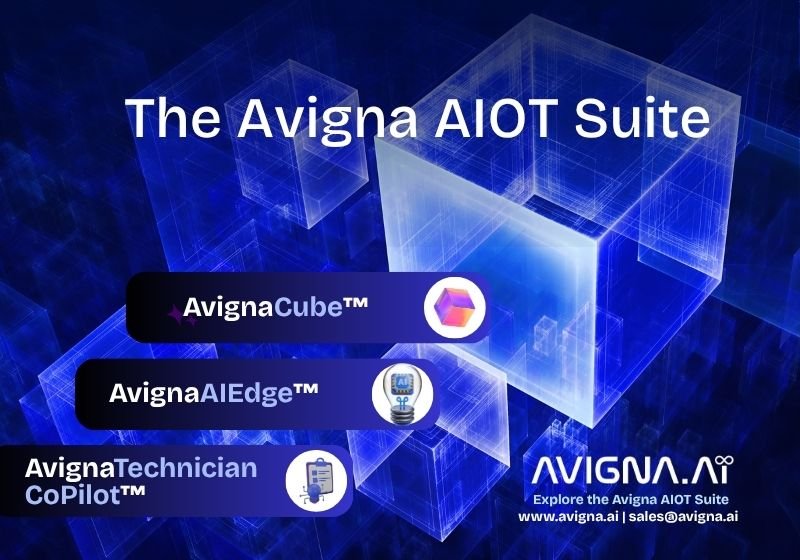
Jayesh: We believe AvignaCUBE is our signature product. We designed it to be one of the best indsutrial IoT platforms. AvignaCube is highly customizable, scalable, and future-proof. It allows easy integration of machine-level legacy industrial IoT systems through open connectivity alongside the latest cloud technologies. Our innovative APIs and integration engine drives this unified approach. The platform rapidly transforms massive volumes of IoT data into actionable insights through advanced analytics and modeling.
Nambivel: Fortune 500 companies can accelerate their digital transformation through Avigna Cube’s pre-built applications for common scenarios. These provide a jumpstart for optimization initiatives. At the same time, open APIs facilitate customized extensions as needed to address unique business challenges. Overall, the agility and insights delivered set our platform apart.
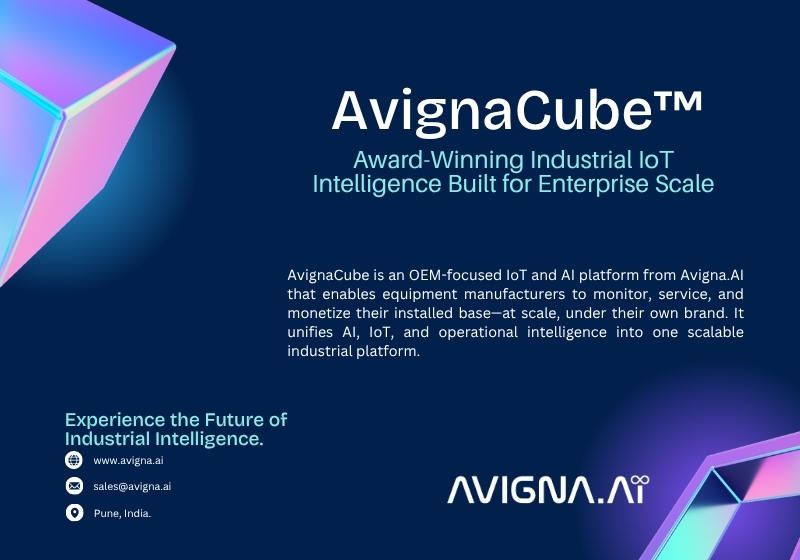
Team: Can you share some success stories or case studies where your IoT consulting and advisory services have significantly improved operational efficiency for your clients?
Jayesh: One example is a leading large industrial equipment OEM. The client had around 4000+ connected assets with 50data points per asset with 20GB+ data growth per day. We offered IoT implementation services and support for legacy as well as new generation assets to this OEM client.
Nambivel: Our success involved a large buildings management company with thousands of HVAC systems across offices. Our team helped centrally manage energy usage in a customized IoT application. This delivered actionable alerts when usage exceeded norms. Within a year remote control reduced monthly energy bills by over 30% from optimized scheduling.

Team: Rapid prototyping is a critical part of your service offering. How does this process work at Avigna, and why is it important for your customers?
Jayesh: Our rapid prototyping process involves functional simulations and dynamic proof-of-concept demos. We work cross-functionally to model solutions virtually using historical and real-time IoT data before implementation. This allows for validating use cases and visualizing dashboards upfront.
Nambivel: Customers find significant value in refining requirements after seeing early simulations. Unexpected insights often emerge. Risks of full projects are minimized by proving concepts on smaller pilots first. Prototyping helps achieve buy-in while catching technical issues in labs over software. Overall, rapid prototyping de-risks the journey to ROI.
Team: Custom software development for IoT can be complex. How do you ensure that the solutions you provide are tailored to meet the specific needs of each client?
Jayesh: Ensuring solution fit is a priority. We hold interactive workshops to understand each unique operating environment and strategic goals deeply. Customers provide feedback at every stage, from scoping to UX reviews.
Nambivel: Our agile approach relies on frequent showcases to get continual updates from the customer. This ensures we stay aligned as their needs evolve dynamically. Cross-functional teams are also dedicated to each project. With open communication lines, we can adapt nimbly to address any priority changes.
Team: What role does your IoT platform Avigna Cube play in enhancing predictive maintenance and energy management in the HVAC industry?
Jayesh: Avigna Cube plays a vital role in HVAC through comprehensive asset insights. Sensors and tags generating real-time performance data flow securely into our analytics engines, as depicted in the network diagram. Using advanced modeling, we derive predictive algorithms and KPIs to provide actionable recommendations like forecasting repairs before failures occur. We are humble and happy that Avigna Cube is one of the award-winning IoT platforms in India.
Nambivel: Reliable facilities operations are critical, so data-driven visibility into assets is key. The methodical security approach depicted safely captures multidimensional operational data at the device level. Customers appreciate how our solutions empower accurate foresight into equipment health and energy expenditures through predictive strategies
Team: How do you ensure data security and privacy in your IoT solutions, especially for large-scale industrial and Fortune 500 clients?
Jayesh: Ensuring robust data security and privacy is crucial in the IoT space, especially for critical infrastructure and Fortune 500 clients who entrust us with their sensitive operational and customer information. We follow a multi-layered approach, and include various components like firewalls, encryption, and intrusion prevention working together to shield systems from cyber threats. Our platform implements industry-best practices across each of these areas.
Nambivel: Customer trust is critical in IoT industry, so we make data protection a top priority. Strategies like regular patching, change management processes, and segmentation of networks from devices to applications, our implementation aligns closely. Whether enforcing the least privileged access within the platform or rigorously monitoring and logging events for rapid incident response, adhering to industry frameworks maintains robust governance.
Team: With the rapid evolution of technology, as a leading IoT Services provider in India, how does your company stay ahead of the curve and continue to innovate in the IoT space?
Jayesh: To deliver ongoing value, our research extensively tracks technological evolutions illustrated on the whiteboard, like edge computing and 5G. Feedback also inspires product roadmap improvements recently seen in hybrid deployability and ease of use. We help clients maximize insights through applying innovations.
Table: Industries Using IoT Solutions
| Industry | Typical IoT Applications | Business Impact |
| Manufacturing | Equipment monitoring, predictive maintenance | Reduced downtime |
| Energy | Smart grid monitoring | Improved energy efficiency |
| Smart Buildings | HVAC and lighting automation | Lower operational costs |
| Logistics | Fleet tracking and asset monitoring | Better supply chain visibility |
| Agriculture | Soil and environmental monitoring | Improved crop productivity |
Nambivel: It is energizing to work with a team dedicated to diligently learning and remaining ahead of industry shifts depicted in the diagram for customer benefit. The culture of discovery exemplified supports the advancement of client visions through emerging IoT capabilities.
Team: What are the most common misconceptions about IoT implementation that you encounter, and how do you address them with your clients?
Jayesh: The initial expectation of most planning views is that, for IoT to work, there must be extensive coding or lack of immediate results. Even so, our pre-configured packages provide solutions to this problem by employing integrated security layers eliminating the need for any customization work.
Nambivel: When speaking about the return on investment, it is important to know that the operating margin is not always going to translate into more revenue for the business. It takes about one year for most companies to notice cost savings. And making sure partners have enough information can also be very helpful.

Team: Can you discuss any upcoming trends or technologies in the IoT industry that you are particularly excited about and plan to incorporate into your services?
Jayesh: The increasing complexity of networks presents edge computing with an opportunity to offer insights into industrial systems and ‘Internet of things’ installations at deeper levels. We’re developing technologies for conducting instantaneous analysis of assets without the need to access security walls. For those clients who process large or timely data streams in multiple sectors, this process is most beneficial.
Nambivel: There are new edge computing technologies that create unique working relationships that revolutionize how ideas are born and how things happen in distant settings. We are excited at the prospect of partnering across sectors to include edging capabilities in our service bundles and creating conditions for clients to control remote or mobile operations more independently. There is also potential to offer edge-based services for other providers, leveraging our experience in asset-intensive domains depicted.
Team: How do you define AIoT in the context of enterprise systems?
Jayesh: AIoT, or Artificial Intelligence of Things, is not a standalone platform but an architectural approach where IoT systems and AI models operate as a unified decision layer. In enterprise environments, it connects real-time sensor data with machine intelligence to enable contextual decisions.
Nambivel: At Avigna.AI, we view AIoT as the bridge between IoT implementation and operational intelligence. It enables predictive maintenance, real-time monitoring, and adaptive workflows. The real value of AIoT lies in reducing decision latency across distributed operations and improving responsiveness in complex industrial environments.
Team: Where does Edge AI fit within an AIoT architecture?
Jayesh: Edge AI is a critical execution layer within modern AIoT architecture. Instead of relying entirely on centralized cloud systems, Edge AI enables processing and inference closer to where data is generated, such as machines, sensors, or industrial gateways. This reduces latency and improves operational reliability, especially in manufacturing, logistics, and energy systems.
Nambivel: In our IoT consulting and IoT implementation work, we see Edge AI as essential for real-time decision-making. It complements cloud AI by handling time-sensitive tasks locally while syncing insights to enterprise systems.
Team: Why is Edge AI becoming essential for enterprise operations today?
Jayesh: Enterprises are increasingly operating in environments where milliseconds matter. Traditional cloud-based architectures introduce latency that can impact production efficiency, asset safety, and operational continuity.
Nambivel: Edge AI solves this by enabling localized intelligence at the operational layer. In AI-powered IoT solutions, this means faster anomaly detection, immediate response triggers, and reduced dependency on constant cloud connectivity. For enterprises scaling AIoT, Edge AI is no longer optional. It is a foundational requirement for resilient, distributed, and real-time industrial systems.
Team: How does Azure AI Foundry contribute to enterprise AIoT systems?
Jayesh: Azure AI Foundry provides the cloud intelligence backbone for enterprise AIoT ecosystems. It supports model development, deployment, orchestration, and governance at scale. In combination with IoT services and Edge AI, it enables a hybrid architecture where intelligence is distributed across cloud and edge environments.
Nambivel: At Avigna.AI, we integrate Azure AI Foundry into enterprise systems to ensure AI models remain scalable, governed, and continuously optimized. This allows organizations to operationalize AI beyond pilots and embed it into production environments effectively.
Team: How do AIoT, Edge AI, and IoT services work together in real enterprise environments?
Jayesh: In practical enterprise architecture, IoT services form the data foundation, capturing signals from devices and operational systems. Edge AI processes time-sensitive data locally, enabling immediate decision-making. AIoT connects these layers into a unified intelligence framework, ensuring insights translate into operational actions.
Nambivel: Azure AI Foundry supports the cloud intelligence and model lifecycle. Together, they enable predictive maintenance, real-time monitoring, and advanced analytics use cases. At Avigna.AI, our IoT implementation approach focuses on aligning all these layers into a single operational architecture.
Team: Before we wrap up, looking ahead, what are your goals and vision for Avigna in the next five years, and how do you plan to continue delivering value to your clients?
Jayesh: We are targeting an orderly diversification of our product line and platform portfolio to cater to the evolving requirements of numerous systems in industries such as manufacturing, energy, and utilities to enhance our leadership position in the next five-year period. This will provide the flexibility required to satisfy myriad customization demands through scalable, modular solutions.
Nambivel: Our goal is to help our clients who are facing digital challenges different from others experience more value throughout their journey. We are further interested in dealing with the intricacies of various sectors, such as operating in multiple verticals globally. The new skills and knowledge gained will increase trust between all partners concerned with the whole transition process, starting with blueprinting through actualizing results.
Talk to Our AIoT Specialists
As businesses accelerate toward connected operations, choosing the right IoT service provider in India is no longer just about device connectivity. Enterprises now need scalable AIoT solutions, edge intelligence, cloud-native IoT platforms, and real-time analytics that drive measurable business outcomes. From smart manufacturing and predictive maintenance to connected logistics and intelligent automation, leading IoT companies in India are helping organizations modernize operations with secure, data-driven ecosystems. If your business is exploring IoT services, industrial IoT, Edge AI, or AIoT transformation, partnering with an experienced IoT solutions provider can significantly reduce deployment complexity and accelerate innovation.
AvignaAI – the leading IoT Services provider in India – specializes in IoT Consulting, Implementation and Platform. With its intensive experience in catering to the connectivity needs of Fortune-500 and Large-Scale Industries, team Avigna.AI is geared up to expand their offerings to diverse clientele.
Looking to build scalable IoT and AIoT solutions for your enterprise? Connect with our experts who can help you design, deploy, and optimize intelligent connected systems tailored to your industry and business goals.
FAQs:
- What exactly is Industrial IoT (IIoT)?
Industrial Internet of Things (IIoT) includes the network of connected devices and systems used in various industries. These systems are used to gather data, improve operational processes, and enable automation. - Which sectors gain an advantage from IoT solutions?
Manufacturing, energy, HVAC, logistics, and smart buildings are poised to benefit significantly. - How long does it take to get the Internet of Things up and running?
The timeline for completion typically falls somewhere between six and twelve months. The exact duration depends on the project’s size and how complex it is. - What kind of return on investment can companies anticipate from the Internet of Things?
Over time, businesses can realize cost savings, boost efficiency, and gain predictive insights.