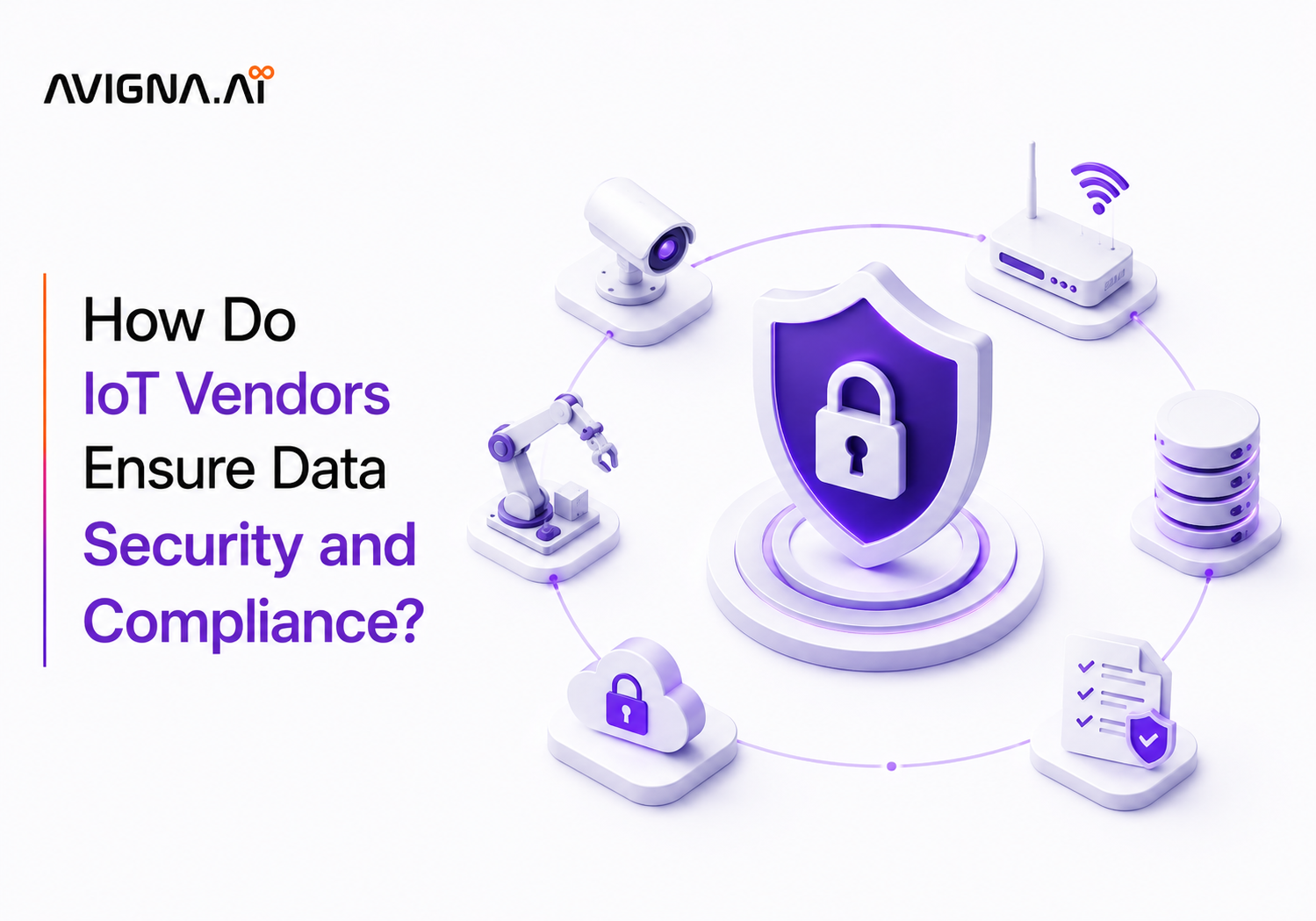
How Do IoT Vendors Ensure Data Security and Compliance?
The rapid expansion of connected devices across manufacturing, logistics, healthcare, utilities, and enterprise infrastructure has fundamentally changed how organizations operate. Industrial systems are now continuously generating operational intelligence through sensors, gateways, cloud platforms, and AI-driven analytics.
However, greater connectivity also introduces greater cybersecurity exposure.
For enterprises deploying Industrial IoT (IIoT) at scale, security and compliance are no longer technical afterthoughts. They have become strategic business priorities directly linked to operational continuity, regulatory readiness, customer trust, and enterprise resilience.
According to IBM’s Cost of a Data Breach Report, the global average cost of a data breach reached $4.45 million, with critical infrastructure industries among the most impacted sectors. As industrial environments become increasingly digitized, IoT vendors are expected to deliver not only connectivity and automation, but also enterprise-grade security frameworks capable of protecting highly distributed ecosystems.
This raises an important question for business leaders:
How do IoT vendors ensure data security and compliance in complex industrial environments?
Understanding IoT Security in Modern Enterprises
IoT security refers to the technologies, policies, and operational controls used to protect connected devices, networks, applications, and data within an IoT ecosystem.
Unlike traditional IT systems, IoT environments often involve:
- Thousands of distributed endpoints
- Edge devices operating in remote environments
- Legacy industrial equipment
- Real-time operational data flows
- Cloud and on-premise integrations
- Third-party software ecosystems
As a result, industrial IoT security requires a far broader approach than conventional cybersecurity.
A modern IoT security architecture must secure:
- Devices
- Firmware
- Communication protocols
- Data transmission
- Cloud infrastructure
- User access
- Operational workflows
For enterprises operating across regulated industries, compliance requirements add another critical layer of complexity.
Why IoT Security Has Become a Boardroom-Level Concern
Cybersecurity incidents within operational technology (OT) environments can lead to:
- Production downtime
- Supply chain disruptions
- Intellectual property theft
- Regulatory penalties
- Safety incidents
- Reputational damage
Industrial environments are particularly vulnerable because many legacy systems were never designed for internet connectivity.
As organizations modernize factories and supply chains through AIoT initiatives, attackers increasingly target connected infrastructure that bridges IT and OT environments.
This is why leading enterprises now evaluate IoT vendors based on:
- Security maturity
- Compliance readiness
- Governance capabilities
- Incident response frameworks
- Long-term risk management
In many cases, cybersecurity posture has become a decisive factor during vendor selection.

The Most Common Security Risks in Industrial IoT Deployments
Unauthorized Device Access
Weak authentication mechanisms can allow malicious actors to gain access to connected devices and operational systems.
Without centralized identity management, enterprises may struggle to monitor or revoke device-level permissions across large-scale deployments.
Insecure Firmware and Software Updates
Outdated firmware remains one of the most common attack vectors in industrial IoT ecosystems.
Vendors must ensure secure update mechanisms that prevent tampering and maintain operational continuity during deployments.
Unencrypted Data Transmission
Industrial systems continuously exchange operational data between edge devices, gateways, cloud platforms, and enterprise applications.
Without end-to-end encryption, sensitive operational intelligence can become exposed during transmission.
Third-Party Integration Vulnerabilities
IoT platforms often integrate with:
- ERP systems
- MES platforms
- SCADA systems
- Cloud services
- AI applications
Every integration point introduces additional attack surfaces that require careful governance and monitoring.
Limited Visibility Across Distributed Environments
Large industrial environments may include thousands of geographically distributed devices.
Without centralized monitoring and anomaly detection, organizations may fail to identify suspicious activity early enough to prevent escalation.
How Leading IoT Vendors Ensure Data Security and Compliance
1. Zero Trust Security Architecture
Modern IoT vendors increasingly adopt Zero Trust principles.
Under a Zero Trust model:
- No device is automatically trusted
- Every request is continuously verified
- Access is granted based on identity and context
This approach significantly reduces the risk of lateral movement within industrial networks.
Zero Trust architectures commonly include:
- Multi-factor authentication
- Device identity verification
- Continuous authorization
- Least-privilege access control
For industrial enterprises, Zero Trust has become an essential cybersecurity foundation.
2. End-to-End Data Encryption
Enterprise-grade IoT vendors secure data both:
- In transit
- At rest
Encryption protocols help ensure operational data cannot be intercepted or manipulated during communication between:
- Devices
- Gateways
- Edge platforms
- Cloud environments
Strong encryption standards are especially critical in sectors such as:
- Manufacturing
- Healthcare
- Energy
- Logistics
- Defense
3. Secure Device Lifecycle Management
Security must extend across the entire device lifecycle.
Leading vendors implement:
- Secure device onboarding
- Identity provisioning
- Remote device management
- Firmware validation
- Secure decommissioning
This ensures enterprises maintain visibility and control over connected infrastructure from deployment through retirement.
4. Role-Based Access Control (RBAC)
Industrial environments involve multiple stakeholders:
- Operators
- Engineers
- Administrators
- Vendors
- Third-party contractors
Role-Based Access Control ensures users only access systems and data relevant to their responsibilities.
This minimizes insider risks while improving governance and auditability.
5. Continuous Monitoring and Threat Detection
Modern IoT ecosystems generate vast volumes of operational telemetry.
Advanced vendors integrate:
- Real-time monitoring
- AI-driven anomaly detection
- Security Information and Event Management (SIEM)
- Predictive threat analytics
Continuous monitoring enables enterprises to detect:
- Abnormal device behavior
- Network anomalies
- Unauthorized access attempts
- Potential ransomware activity
before operational disruption occurs.
6. Network Segmentation
Industrial IoT vendors often separate critical operational systems from enterprise IT networks.
Segmentation helps contain cybersecurity incidents and prevents attackers from moving freely across environments.
This is particularly important in critical infrastructure and manufacturing operations where downtime can have significant financial consequences.
Key Compliance Standards in Industrial IoT
| Compliance Standard | Industry Relevance | Purpose |
| ISO 27001 | Enterprise IT & IoT | Information security management |
| IEC 62443 | Industrial automation | OT cybersecurity framework |
| SOC 2 | Cloud & SaaS platforms | Data security and governance |
| GDPR | Global enterprises | Data privacy and protection |
| HIPAA | Healthcare | Patient data protection |
| NIST Cybersecurity Framework | Critical infrastructure | Risk management guidance |
Enterprises increasingly prefer IoT vendors with demonstrated alignment to recognized global security frameworks.
Compliance readiness not only reduces risk exposure but also simplifies enterprise procurement and regulatory audits.
The Growing Role of AI in IoT Cybersecurity
Artificial Intelligence is becoming increasingly important in industrial cybersecurity.
AI-powered security systems can:
- Detect anomalies in real time
- Identify unusual behavioral patterns
- Predict potential failures
- Automate threat response workflows
As AIoT ecosystems grow more complex, intelligent cybersecurity systems will become essential for maintaining operational resilience.
This convergence of AI and IoT security is expected to define the next phase of industrial digital transformation.
What Enterprises Should Evaluate Before Choosing an IoT Vendor
Security evaluation should extend far beyond product features.
Enterprise leaders should assess:
- Security architecture maturity
- Cloud security capabilities
- Compliance certifications
- Device management frameworks
- Integration security
- Incident response procedures
- Scalability
- Governance models
The right IoT partner should align cybersecurity with long-term operational strategy.
This is especially important for enterprises operating across multi-site or global industrial environments.
How Avigna.AI Supports Secure Enterprise IoT Deployments
Avigna AI helps enterprises modernize industrial operations through secure, scalable, and enterprise-ready AIoT solutions.
With expertise across IoT engineering, cloud integration, industrial automation, and AI-enabled operational intelligence, Avigna AI supports organizations in building resilient connected ecosystems designed for modern compliance and cybersecurity requirements.
Avigna AI’s approach focuses on:
- Secure edge-to-cloud architectures
- Enterprise integration readiness
- Operational visibility
- Intelligent monitoring
- Scalable AIoT infrastructure
- Long-term digital transformation support
By combining industrial expertise with enterprise-grade technology frameworks, Avigna AI enables organizations to deploy connected systems with greater confidence, governance, and operational resilience.
Get Started
Industrial IoT is transforming how enterprises operate, optimize, and scale.
However, connectivity without security creates unacceptable operational risk.
As industrial ecosystems become increasingly intelligent and interconnected, cybersecurity and compliance must remain foundational to every deployment strategy.
The most effective IoT vendors are no longer evaluated solely on technical capability. They are evaluated on their ability to deliver secure, compliant, and resilient digital infrastructure capable of supporting long-term enterprise transformation.
For organizations investing in AIoT modernization, selecting a trusted technology partner with strong cybersecurity capabilities is no longer optional. It is a strategic business necessity. To discuss your security concerns, avail our free consultation for your IoT implementation.
Frequently Asked Questions
Why is IoT security important for industrial enterprises?
Industrial IoT systems connect operational infrastructure, machines, and enterprise applications. Weak security can expose organizations to downtime, ransomware, operational disruption, and regulatory penalties.
What is the difference between IT security and IoT security?
Traditional IT security focuses primarily on enterprise networks and user systems. IoT security extends to connected devices, operational technology, edge environments, firmware, and machine-to-machine communication.
What compliance standards are important for Industrial IoT?
Common standards include ISO 27001, IEC 62443, SOC 2, GDPR, HIPAA, and the NIST Cybersecurity Framework.
How do IoT vendors protect industrial data?
Leading vendors implement encryption, Zero Trust architecture, secure device lifecycle management, role-based access control, continuous monitoring, and network segmentation.
What should enterprises evaluate before selecting an IoT vendor?
Organizations should assess security architecture, compliance readiness, cloud capabilities, integration security, scalability, governance frameworks, and long-term operational support.