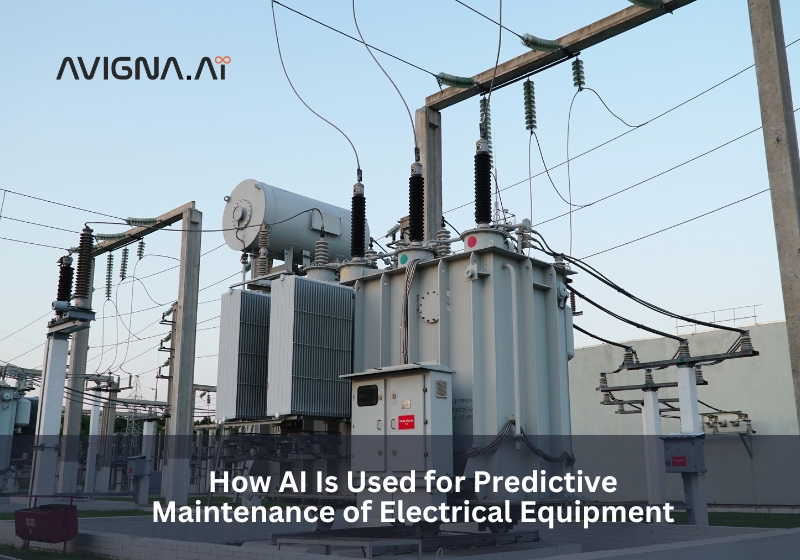
How AI Is Used for Predictive Maintenance of Electrical Equipment
AI has turned out to be a breakthrough for predictive maintenance of electrical equipment. One of the most advanced technologies is AI-powered predictive maintenance. Data analytics, machine learning, and real-time monitoring, the operators can predict what the future condition of a particular equipment will be if not maintained. This results in reduced downtime, cost saving and life maximization for the equipment.
Therefore, learning about AI based predictive maintenance becomes important. This article revolves around how AI is helping in predictive maintenance electrical equipment.
“AI-driven predictive maintenance is reshaping how we manage electrical equipment. It’s doing this through real-time monitoring, catching faults before they become problems, and using data to guide decisions. With machine learning and IoT data at their disposal, companies can cut down on downtime, save on maintenance, and make their assets last longer. The result? Smarter, safer, and more efficient operations, no matter the industry.”
The Role of AI in Predictive Maintenance
AI now plays a major role in predictive maintenance of electrical generators and energy plants which include:
Data Collection and Integration
Electrical equipment generates large amount of operational data. These data are sensor readings, control logs, and maintenance records. AI reads and reconciles the data from these diverse sources to form a composite view of how the equipment is performing.
Machine Learning and Data Analysis
The machine learning algorithms recognize patterns and anomalies in the data that suggest imminent failures in the equipment. They apply anomaly detection, regression analysis, and time-series analysis techniques.
Predictive Algorithms and Models
Machine learning-derived insights become the source of predictive maintenance of energy plants. It uses a set of parameters to predict when a failure will occur. The models go on learning by themselves and thus improve their own accuracy.
Real-Time Monitoring and Alerts
IoT sensors and data acquisition systems provide real-time equipment monitoring. Upon the detection of anomalies, the AI system immediately triggers alerts. Thereby, reducing the likelihood of failures or long downtimes.
The Benefits of AI-Powered Predictive Maintenance
Incorporating AI offers very many benefits from the maintenance side that can change predictive maintenance of electrical generators which are:
Reduced Operational Downtime
It predicts equipment failure and empowers the maintenance teams to fix the problems. Therefore, AI-driven maintenance reduces unplanned downtimes. It makes production processes go smooth, improves workflow, and consequently improves the overall equipment effectiveness (OEE).
Cost Savings
AI predictive maintenance saves a substantial amount of money from emergency repairs, unnecessary maintenance, and early replacement of equipment. This leads to strategic allocation of the budget towards initiatives that promise long-term growth and profitability. In turn, organizations can undoubtedly make an excellent evaluation of how to spend their resources.
Extended Equipment Lifespan
Regular and optimized maintenance is quite essential for extending the lifespan of electrical equipment. When AI is applied, predictive maintenance of energy plants is carried out at the most suitable times that could maximize the efficiency and lifetime of any critical assets.
Enhanced Safety and Compliance
This form of predictive maintenance assists an organization to avert any safety hazards from becoming serious. Thus, it keeps an environment that is safer for ecosystem members and operators. Furthermore, it will support compliance with business standards and regulations, thereby lessening the risk of fines or legal issues.
Improved Resource Allocation
AI-generated insights regarding predictive maintenance enable an organization to plan better its maintenance schedules and population allocation. Technicians are not required much when all routine checks are done. While maintenance teams’ efforts are focused on areas that require immediate attention, thus increasing productivity and efficiency.
Enhanced Performance Insights
AI-powered predictive maintenance of energy plants generates data-driven analytics and predictive models. It provides many insights to an organization regarding its electrical equipment’s overall performance and condition. These insights drive strategic decision-making, continuous improvement, and open avenues for operational excellence.
Table: Predictive vs Preventive vs Reactive Maintenance
|
Parameter |
Predictive Maintenance (AI-Based) | Preventive Maintenance |
Reactive Maintenance |
| Approach | Data-driven and condition-based using AI & IoT | Scheduled maintenance at regular intervals | Maintenance after equipment failure |
| Technology Used | AI, Machine Learning, IoT sensors, analytics | Basic monitoring tools, manual inspections | No advanced technology required |
| Maintenance Timing | Performed only when data indicates potential failure | Performed periodically regardless of equipment condition | Performed only after breakdown occurs |
| Downtime | Minimal downtime due to early detection | Moderate downtime due to scheduled maintenance | High downtime due to unexpected failures |
| Cost Efficiency | Highly cost-effective (reduces unnecessary maintenance and repairs) | Moderate cost (includes unnecessary servicing) | High cost due to emergency repairs and production loss |
| Equipment Lifespan | Maximized through optimized maintenance | Improved but not fully optimized | Reduced due to irregular maintenance |
| Failure Prediction | High accuracy using real-time data and predictive models | No real prediction, only assumption-based | No prediction capability |
| Resource Utilization | Optimized workforce and resource allocation | Moderate efficiency | Inefficient resource usage |
| Implementation Complexity | High (requires AI models, IoT infrastructure) | Medium (requires planning and scheduling) | Low (no planning required) |
| Risk Level | Low risk due to proactive insights | Medium risk | High risk of sudden failures |
| Data Usage | Extensive use of real-time and historical data | Limited data usage | No data usage |
| Best Use Case | Critical assets, power plants, smart industries | Standard equipment with predictable wear | Non-critical or low-cost equipment |
Real-World Applications of AI-Powered Predictive Maintenance for Electrical Equipment
Several industries have reported the success of AI-assisted predictive maintenance in electrical equipment. Let’s look at a few real-world examples that show the power of this technology in transforming:
Power Grids and Utility Companies
- Predictive maintenance of electrical substations, transformers, and transmission lines.
- AI algorithms work with sensor data, weather patterns, and past failures to predict and assess grid failures.
- Increased grid reliability, reduced downtime, and operational efficiency enhancement.
Manufacturing Facilities
- Predictive maintenance of critical production equipment such as motors, generators, and switchgear.
- AI models identify signs that could lead to failure and allow maintenance to be undertaken before failure occurs.
- Increased productivity, reduction of unplanned downtime, and enhanced product quality.
Commercial and Industrial Buildings
- Predictive maintenance of electrical systems, such as lighting, HVAC, and building automation.
- AI-driven insights allow facility managers to fine-tune maintenance schedules and maximize the lifespan of their electrical assets.
- Increased energy efficiency, reduced maintenance cost, occupant comfort and safety.
Data Centers and IT Infrastructure
- Predictive maintenance for electrical systems powering critical IT equipment, including Uninterruptible Power Supplies and Backup Generators
- AI assists in predicting the failure of electrical components so that maintenance can be performed ahead of time, ensuring continuous uptime for time-critical operations.
- Increasing the reliability of the data center, reducing the risk of service disruptions, and optimizing energy consumption.

Table: Data Sources Used in Predictive Maintenance Systems
|
Data Source |
Purpose |
| IoT Sensor Data | Real-time monitoring & fault detection |
| Operational Data | Usage patterns & performance analysis |
| Maintenance Records | Failure trends & scheduling |
| Control System Logs | System behavior & anomaly detection |
| Environmental Data | External impact on equipment |
| Energy Data | Efficiency & abnormal consumption tracking |
| Alarm/Event Data | Instant alerts & issue identification |
| Inspection Reports | Manual validation of equipment condition |
The Future of AI in Predictive Maintenance
AI will keep on evolving in the field of electrical equipment predictive maintenance. Some of the technologies that could be seen in future are:
- Integration of AI with Augmented Reality (AR)
- Collaborative Robotics (Cobots) in Predictive Maintenance
- Digital Twins and Simulation-Based Predictive Maintenance
- Real-Time Data Sharing and Collaborative Maintenance
- Predictive Maintenance as a Service (PMaaS)
Conclusion
With AI-powered predictive maintenance of electrical generators, the period of reactive and data-less asset management is now a thing of the past. The future of AI in electrical equipment maintenance is filled with limitless possibilities. Strategic investments around these transformative technologies would allow organizations to race ahead of the competition. Thus, providing reliability, and set an environment for a more sustainable and efficient future.
Looking to implement AI-powered predictive maintenance for electrical equipment?
Join us on our mission to building a connected world. Contact us at queries@avigna.ai for a free IoT consultation.
FAQs:
- What does AI predictive maintenance mean?
AI predictive maintenance uses machine learning, IoT sensors, and data analytics to keep an eye on the health of equipment in real time and predict when it will break down, so maintenance can be done before it happens.
- How does AI make predictive maintenance better for electrical equipment?
AI uses both current and past data to find problems, guess when they will happen, and send out alerts on its own. This helps assets work better, cut down on downtime, and make maintenance schedules more effective.
- What are the benefits of AI predictive maintenance?
– Reduced Operational Downtime
– Lower maintenance costs
– Extended Equipment Lifespan
– Enhanced Safety and Compliance
– Improved Resource Allocation
– Enhanced Performance Insights
- How do IoT sensors make predictive maintenance easier?
IoT sensors gather real-time information like temperature, vibration, voltage, and pressure. AI then uses this data to find early signs of problems and send out alerts as soon as possible.
- Can AI-based predictive maintenance cut costs?
Yes, it saves a lot of money by avoiding emergency repairs, cutting down on downtime, and getting rid of unnecessary maintenance tasks.