AIoT for Energy and Utilities: From Grid Asset Monitoring to Intelligent Operations
Energy and utility operations depend on the performance of assets distributed across substations, transmission networks, power generation facilities and other critical infrastructure. These assets generate continuous streams of operational data, yet having access to that data does not automatically provide a clear understanding of equipment health, emerging faults or the actions required to maintain reliable operations.
The challenge for energy providers and utilities is no longer simply connecting equipment. It is making the resulting information useful for operational decisions.
AIoT is the convergence of the Internet of Things and artificial intelligence, and can play a more substantial role.
Why Traditional Grid Asset Monitoring Is Not Enough
Modern energy infrastructure generates information through sensors, control systems, equipment monitoring platforms, inspection records and maintenance systems. Each source provides a different part of the operational picture.
However, when these sources remain disconnected, teams may struggle to correlate equipment behaviour with historical faults, maintenance activity or operating conditions.
A monitoring system might identify an abnormal reading. An engineer may then need to consult another application for equipment history, review technical documentation and contact a maintenance team to understand the implications.
The issue is not necessarily a lack of data. It is the lack of context connecting that data to a decision.
For utilities managing distributed assets, this fragmentation can complicate fault investigation, maintenance planning and operational coordination. An effective digital infrastructure strategy must therefore go beyond collecting telemetry and presenting dashboards. It must help teams interpret equipment information in the context of the asset, its history and its operating environment.
How AIoT Improves Asset Intelligence
An AIoT platform connects equipment data with analytical and AI capabilities to help organisations move from basic monitoring towards contextual understanding.
For energy and utility operations, this involves several capabilities.
1. Connected asset visibility
An AIoT platform can bring equipment telemetry and operational information into a common environment. This helps teams establish a more consistent view of asset performance and identify patterns that may otherwise remain hidden across separate systems.
2. Contextual fault analysis
An alert becomes more useful when it can be considered alongside historical equipment behaviour, previous service incidents and relevant technical documentation. AI-assisted analysis can help investigate deviations and explain potential causes, subject to the quality and availability of the underlying information.
3. Predictive maintenance
Machine learning can analyse equipment behaviour and historical patterns to identify indicators associated with potential failures. These insights can support maintenance planning and help teams prioritise inspections. Predictions must still be validated against equipment conditions, engineering requirements and operational procedures.
4. Operational decision support
Natural-language interfaces and AI-generated explanations can make technical information easier to access. Instead of relying exclusively on predefined dashboards, authorised users can ask questions about equipment performance and receive responses grounded in available operational records.
These capabilities do not eliminate the need for engineering expertise. They help make that expertise more effective by reducing the effort required to find, correlate and interpret information.
What an AI-Native Platform Brings to Energy Operations
There is an important distinction between adding a chatbot to an existing monitoring system and building a platform with AI as a core architectural capability.
An AI-native AIoT platform can combine structured equipment telemetry with unstructured information such as manuals, service notes, images and technical documents. A knowledge graph can establish relationships between assets, components, sites, faults and maintenance procedures.
This context gives AI applications a more useful foundation for answering operational questions.
For example, when an equipment anomaly is detected, the platform can correlate the available readings with relevant asset history and technical information. It can then help explain the anomaly and recommend a next step for review. Where configured integrations and approved controls permit, AI-driven workflows can also support downstream processes.
The quality of these outputs depends on data quality, system integration, model performance and appropriate human oversight. AI should support operational judgement, not bypass safety procedures or established engineering controls.
Introducing AvignaCube™ for Energy and Utilities
At Avigna, we see this as an important direction for connected energy infrastructure.
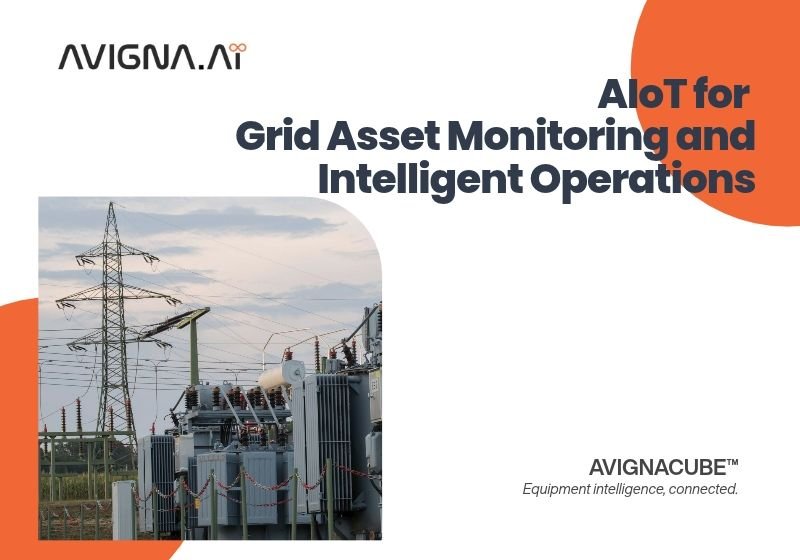
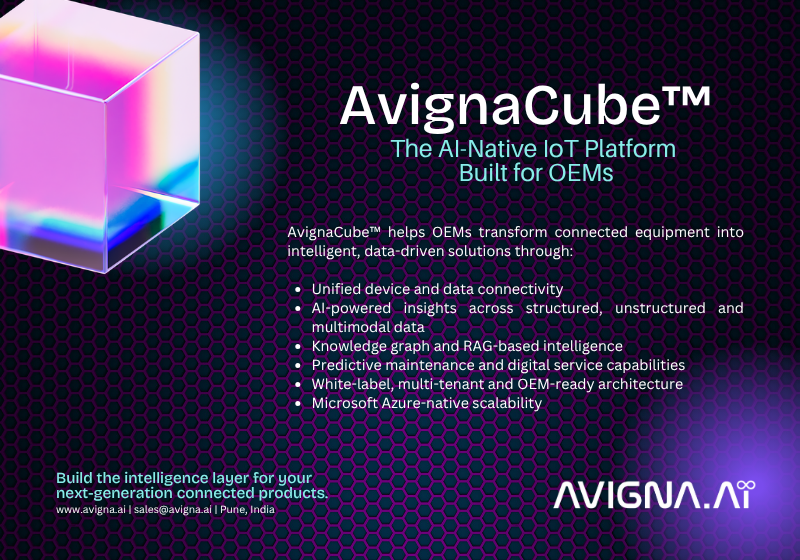
AvignaCube™ is our AI-native AIoT data platform, designed to connect equipment data, operational context and technical knowledge within a common platform architecture.
Its capabilities include equipment monitoring, knowledge-graph-based context, predictive maintenance analytics, natural-language interaction and AI-assisted fault analysis. For energy and utility use cases, the Avigna product blueprint identifies grid and asset monitoring, demand forecasting and AI-assisted outage diagnosis as relevant applications.
The objective is to make equipment information more useful to the people responsible for understanding asset behaviour and managing operations.
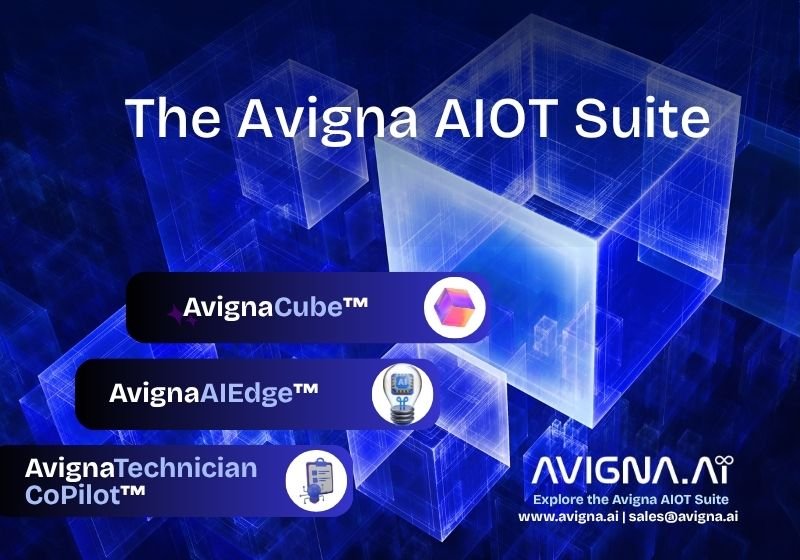
AvignaCube also forms the cloud intelligence layer of the wider Avigna AIOT Suite™, working alongside AvignaAIEdge™ for processing closer to equipment and AvignaTechnicianCoPilot™ for AI-assisted field service.
This creates a foundation for connecting equipment information with the people and processes that need it, rather than treating monitoring, analytics and maintenance as isolated activities.
Building More Intelligent Energy Infrastructure
For energy providers and utilities, the value of AIoT should be measured by its contribution to operational visibility, maintenance decisions and the effective use of technical knowledge.
A platform alone cannot guarantee fewer outages, lower maintenance costs or improved grid reliability. Those outcomes depend on the assets involved, the quality of implementation, integration with existing systems and how teams use the resulting insights.
What a well-designed AIoT architecture can provide is a stronger foundation: connected information, relevant context and AI-assisted analysis to support better-informed decisions.
As energy infrastructure becomes increasingly digital, the opportunity is to build on connectivity with intelligence that has a clear operational purpose.
Explore AvignaCube™
If your organisation is evaluating AIoT platforms for grid asset monitoring, equipment intelligence or utility operations, we would welcome a conversation about your requirements and the role an AI-native platform could play in your digital infrastructure strategy.
Contact sales@avigna.ai to learn more about the Avigna AIOT Suite™.