How AIoT Connects Grid Monitoring, Edge AI and Field Service in Energy and Utilities
Energy and utility infrastructure generates large volumes of operational data. Substations, power equipment, distributed energy assets and other critical systems continuously produce information that can help operators understand equipment conditions and plan maintenance.
However, collecting data is only one part of the challenge. Utility operators also need to interpret that information, process it where necessary, and make relevant insights available to the people responsible for maintaining infrastructure.
This is where the combination of the Internet of Things (IoT) and artificial intelligence (AI), known as AIoT, becomes valuable. By connecting equipment monitoring, edge computing and AI-assisted field service, energy providers can build a more coordinated approach to equipment intelligence and maintenance.
The opportunity is not simply to connect more assets. It is to connect the systems that monitor them with the intelligence that interprets their condition and the technicians who act on that information.
Why Energy and Utility Operations Need a Connected AIoT Architecture
Energy infrastructure often involves equipment distributed across multiple locations, operational systems and maintenance teams. Information about an asset may be spread across telemetry platforms, service records, technical manuals and maintenance applications.
When these sources remain disconnected, operators may have visibility into equipment readings without having the context required to investigate an issue efficiently.
Three requirements are particularly important:
- Equipment visibility: Operators need access to relevant equipment data and a clearer understanding of asset conditions.
- Local processing: Some environments require data processing close to equipment because of connectivity constraints, response requirements or operational considerations.
- Field service support: Technicians need access to equipment history, technical documentation and troubleshooting guidance while working on site.
Addressing these requirements separately can create fragmented workflows. An integrated AIoT architecture connects them so equipment information can support monitoring, analysis and maintenance.
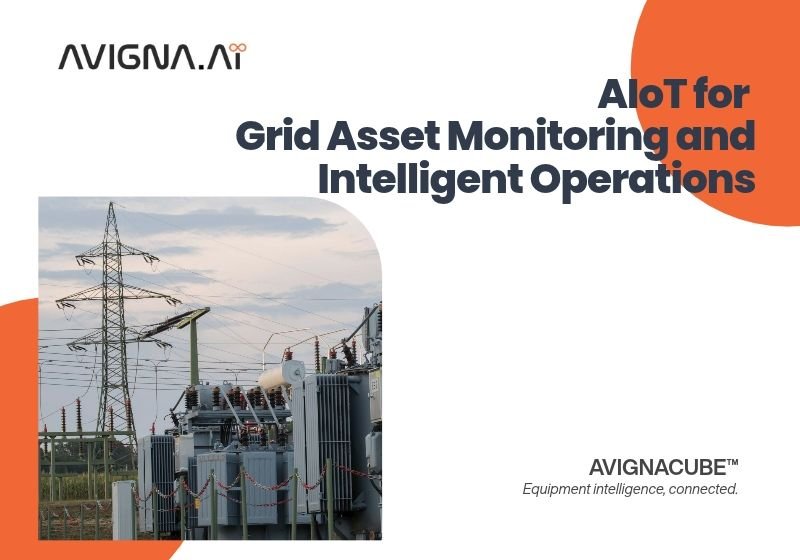
1. AIoT for Grid Monitoring and Equipment Intelligence
Grid asset monitoring provides the foundation for understanding equipment performance. Connected equipment can supply telemetry and operational data, but individual readings do not always explain why a condition has changed or what further investigation may be necessary.
AIoT platforms can help bring equipment data together with relevant context, including asset history, maintenance information and technical documentation.
For energy providers and utilities, this can support several applications.
Improved equipment visibility: Bringing information from connected assets into a common operational view helps teams review equipment conditions and identify areas that need attention.
Contextual fault investigation: AI-assisted analysis can help teams examine equipment readings alongside available historical and technical information when investigating abnormal conditions.
Predictive maintenance analytics: Historical data and equipment trends can support analytical approaches to identifying conditions that may warrant maintenance. Results depend on data quality, suitable models and the specific equipment application.
AI-assisted outage diagnosis: Where relevant operational data is available, AI can help teams retrieve and interpret information that supports fault investigation.
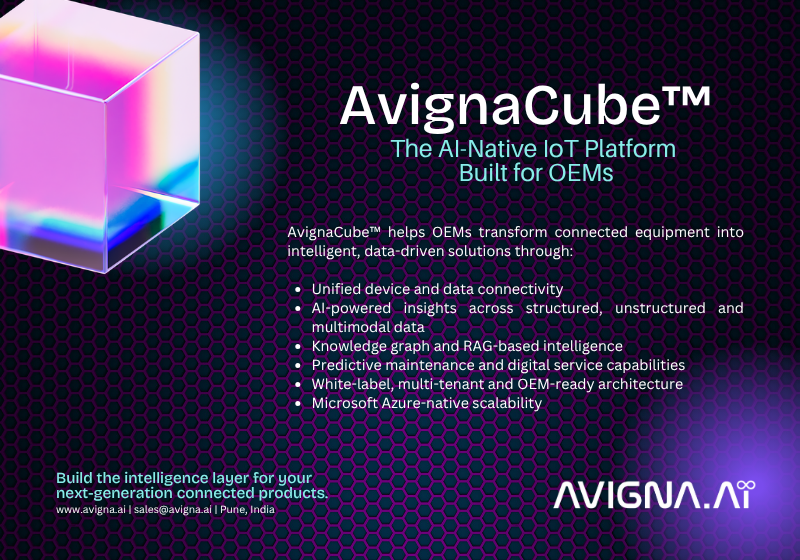
AvignaCube™ is designed to provide this equipment intelligence layer. It connects equipment data, operational context and technical knowledge, supporting applications such as asset monitoring, predictive maintenance analytics and AI-assisted fault analysis.
The objective is to make equipment information more useful for operational understanding and decision-making.
2. Edge AI for Processing Closer to Energy Infrastructure
Not every equipment data processing requirement can depend entirely on cloud connectivity.
Remote utility sites, distributed assets and applications with specific response requirements may benefit from processing capabilities located closer to the equipment. Edge computing enables selected workloads to run locally, while cloud platforms can continue to provide broader visibility, analysis and coordination.
Edge AI extends this approach by enabling supported AI workloads to run near the source of the data.
In energy and utility environments, potential applications include:
- Local analysis of equipment conditions and anomalies.
- Processing sensor data at remote or distributed sites.
- Supporting selected microgrid monitoring and control scenarios.
- Reducing the need to transmit every raw data point to a central platform.
- Maintaining selected processing functions during connectivity interruptions, depending on the deployment configuration.
AvignaAIEdge™ brings data collection, processing and AI capabilities closer to industrial equipment. Its architecture includes a core configuration for industrial connectivity and edge processing, alongside a GPU/AI configuration designed for more demanding workloads such as local AI inference and computer vision.
The choice of workloads should reflect the operating environment. Some tasks are better handled locally, while others benefit from cloud resources and a broader view across assets.
A connected architecture makes room for both.
3. AI-Assisted Field Service for Energy and Utilities
Monitoring equipment and identifying a potential issue are only part of the maintenance process. The next step is often a technician visiting the site, reviewing the available information, diagnosing the problem and recording the work completed.
This stage can involve several sources of information. Technicians may need to consult manuals, search previous service records, confirm equipment specifications or seek guidance from experienced colleagues.
AI-assisted field service can bring relevant information into the technician’s workflow.
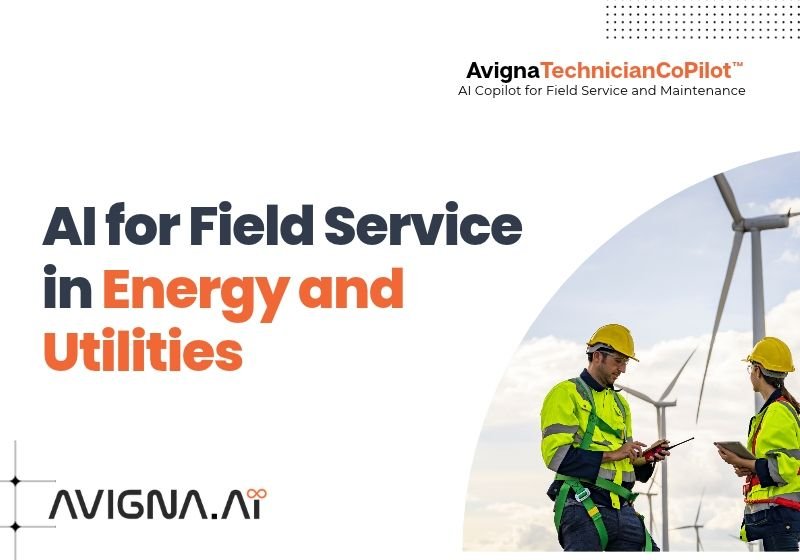
An AI copilot can help technicians search technical documentation, review available equipment history, investigate faults through conversational interactions and capture service notes. Image-based lookup can also assist with identifying equipment or retrieving relevant technical information, subject to the system’s capabilities and appropriate validation.
AvignaTechnicianCoPilot™ is designed to provide this support through a mobile AI assistant for field and plant technicians.
Its capabilities include conversational troubleshooting, technical manual search, photo-based equipment lookup, guided repair support and digital service logging. It can draw on available equipment context and technical knowledge connected through AvignaCube™.
For energy and utility maintenance teams, this approach can make service information easier to access and help capture knowledge generated during maintenance activities.
AI assistance does not replace engineering judgement, approved repair procedures or site safety requirements. It supports technicians by helping them work with relevant information during the service process.

4. Connecting Monitoring, Edge AI and Field Service
The greater opportunity emerges when these capabilities work together.
Consider a potential maintenance workflow involving a connected power asset.
AvignaAIEdge™ processes available equipment data locally and identifies a condition that may require further investigation. Relevant information can be shared with AvignaCube™, where it can be considered alongside available asset history and technical context.
When a technician is assigned to investigate, AvignaTechnicianCoPilot™ can help retrieve applicable manuals, service records and troubleshooting information. After the maintenance activity, the technician’s service notes and resolution details can feed back into the connected knowledge base, depending on the configured integrations.
This creates a connected workflow:
Equipment monitoring ? Edge processing ? Equipment intelligence ? Technician assistance ? Service knowledge
Each stage serves a distinct purpose. Edge AI supports processing close to equipment. The platform connects data with operational context. The field service assistant helps technicians access relevant information and document their work.
Together, these capabilities can help organisations build a more consistent link between equipment conditions, maintenance decisions and field service activities.
5. Where the Avigna AIOT Suite™ Fits
The Avigna AIOT Suite™ brings these three capabilities together through complementary products:
| Product | Primary role | Relevance to energy and utilities |
| AvignaCube™ | Equipment intelligence and operational context | Asset monitoring, equipment history and AI-assisted analysis |
| AvignaAIEdge™ | Local data processing and edge AI | Processing closer to equipment and supporting selected local AI workloads |
| AvignaTechnicianCoPilot™ | AI-assisted field service | Technical information retrieval, troubleshooting support and service documentation |
The products are designed to connect equipment-level processing, cloud-based equipment intelligence and technician workflows.
The specific applications depend on the equipment, available data, required integrations and deployment environment. Organisations should evaluate these factors alongside cybersecurity, operational safety, system reliability and existing infrastructure requirements.
Moving from Connected Assets to Connected Operations
For energy providers and utilities, AIoT is most useful when it connects more than devices. It can bring together equipment information, local processing capabilities and the people responsible for operating and maintaining infrastructure.
Grid monitoring helps teams understand equipment conditions. Edge AI enables selected processing closer to the source. AI-assisted field service helps technicians access relevant technical information and capture maintenance knowledge.
The next step is to connect these capabilities within an architecture suited to the organisation’s operational requirements.
The Avigna AIOT Suite™ brings together AvignaCube™, AvignaAIEdge™ and AvignaTechnicianCoPilot™ to support this approach.
If your organisation is exploring AIoT for grid asset monitoring, edge AI, utility maintenance or field service, connect with Avigna to discuss your requirements.
Contact sales@avigna.ai.
Avigna AIOT Suite™. Building a Connected World.