AI for Field Service in Energy and Utilities: Helping Technicians Troubleshoot Equipment Faster
Energy and utility infrastructure depends on the people who inspect, maintain and repair equipment across substations, power facilities and distributed operational sites. When a fault occurs, technicians must identify the problem, consult technical documentation, review service history and determine the appropriate repair procedure. The time required to find and interpret this information can affect how efficiently maintenance teams respond.
As energy infrastructure becomes more connected, the opportunity is to bring equipment intelligence directly into the technician’s workflow.
AI-powered field service can help technicians access technical information, investigate equipment faults and document maintenance work without switching repeatedly between manuals, applications and service records.
Why Field Service Is a Challenge for Energy and Utilities
Field technicians often work in environments where equipment varies by manufacturer, model, age and operating condition. A technician may have considerable experience with a particular asset but encounter a fault that requires specialist knowledge or information from an earlier service visit.
Several challenges make this work more demanding.
Technical information is distributed. Equipment manuals, standard operating procedures, service bulletins and maintenance records may reside in different systems. Finding the relevant information during a service visit takes time.
Experience is difficult to scale. Experienced technicians develop valuable knowledge through years of troubleshooting. When that knowledge remains with individuals rather than being documented and shared, less experienced team members may have difficulty resolving unfamiliar faults.
Troubleshooting requires context. An error code alone may not explain the underlying problem. Technicians may need equipment specifications, previous fault records, current operating information and repair history to investigate it effectively.
Service documentation adds to the workload. Technicians must record observations, parts replaced, actions taken and final resolutions. When documentation is delayed or incomplete, the organisation loses information that could help future maintenance teams.
AI can help address these challenges by making technical knowledge easier to retrieve, interpret and capture during field operations.
How AI Can Support Field Service Technicians
AI-powered field service tools can combine conversational assistance with equipment information and technical documentation. Their value depends on access to relevant, reliable information and integration with existing service workflows.
1. Conversational equipment troubleshooting
Instead of navigating multiple screens or searching through documents manually, a technician can describe a fault in natural language. An AI assistant can use available equipment telemetry, asset history and relevant technical information to help investigate the issue and suggest diagnostic steps.
This can make troubleshooting more structured, while leaving diagnosis and repair decisions under the technician’s control.
2. Technical manuals and procedure lookup
Retrieval-based AI can search equipment manuals, service bulletins and standard operating procedures to provide relevant answers with references to the source material.
This is particularly useful when technicians need specific instructions for an unfamiliar model, component or fault condition. Grounding answers in approved documentation also makes it easier to verify the guidance before acting on it.
3. Photo-based equipment identification
Where supported, a technician can photograph an equipment nameplate, component or error screen. AI-assisted visual analysis can help identify the asset or part and retrieve related specifications and service history.
The result should be treated as decision support. Technicians must verify identification and follow the applicable safety and maintenance procedures.
4. Faster and more consistent service documentation
Voice-to-text and structured data capture can help technicians record field observations and service outcomes during or immediately after a visit. This reduces reliance on handwritten notes or delayed paperwork and creates a more useful record for future maintenance.
Over time, documented resolutions can become part of the organisation’s service knowledge, subject to appropriate review and data governance.
Introducing AvignaTechnicianCoPilot™
At Avigna.AI, we see AI-assisted field service as an important link between connected equipment and the people responsible for maintaining it.
AvignaTechnicianCoPilot™ is a mobile AI copilot for field and plant technicians. It brings equipment context, service history, technical documentation and conversational troubleshooting into a single workflow, using the knowledge and intelligence available through AvignaCube™.
Its documented capabilities include technical manual search, photo-based lookup, guided repair support, digital service logging and access to asset service history. Where the deployment supports it, core copilot functions can also operate offline through an appropriate AvignaAIEdge™ GPU configuration or on-device language model.
For energy and utility organisations, these capabilities offer a way to make equipment information more accessible at the point of service, including across distributed maintenance operations.
The objective is not to replace a technician’s experience. It is to help technicians apply that experience with better access to the information needed for the task.

Connecting Field Service with Equipment Intelligence
Field service becomes more valuable when the information gathered during a repair contributes to future maintenance decisions.
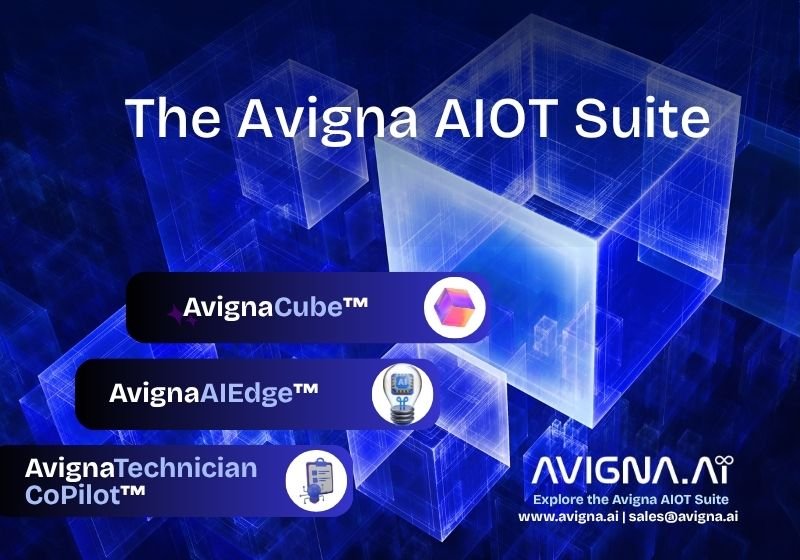
Within the Avigna AIOT Suite™, AvignaTechnicianCoPilot works alongside AvignaCube and AvignaAIEdge. Equipment data and context can inform troubleshooting, while service resolutions and field records can feed back into the shared knowledge base.
This creates a connection between equipment monitoring, local processing and maintenance workflows. It also gives organisations a structured way to capture operational knowledge rather than allowing useful insights to remain in individual conversations or paper records.
Successful implementation still requires accurate documentation, suitable integrations, technician training and clear safety controls. AI-generated guidance should support established engineering procedures, not override them.
Bringing AI into Everyday Maintenance
For energy providers and utilities, AI-powered field service is most useful when it addresses a practical operational need: finding the correct information, investigating a fault and recording the resolution.
The opportunity is to make technical expertise easier to access across the maintenance workforce while improving the quality-of-service information available to the organisation.
Explore AvignaTechnicianCoPilot™
If your organisation is evaluating AI for field service, equipment troubleshooting or utility maintenance, we welcome a conversation about your requirements and how AI-assisted workflows could support your technicians.
Contact sales@avigna.ai to learn more about AvignaTechnicianCoPilot™ and the Avigna AIOT Suite™.
FAQs
How can AI help field service technicians in the energy sector?
AI can help technicians retrieve technical manuals, investigate equipment faults using available asset information, identify components from images and capture service records. Its usefulness depends on data quality, integration and appropriate human oversight.
What is an AI copilot for field service?
An AI copilot for field service is a digital assistant that helps technicians access technical knowledge, troubleshoot equipment and document maintenance work through a conversational interface.
What is AvignaTechnicianCoPilot™?
AvignaTechnicianCoPilot™ is Avigna’s mobile AI assistant for field and plant technicians. It supports conversational troubleshooting, technical documentation lookup, photo-based diagnostics, guided repair and digital service logging, using relevant information available through AvignaCube™.
How does AI assist utility maintenance teams at remote sites?
AI can help technicians access equipment information and troubleshooting guidance. With a supported offline configuration, AvignaTechnicianCoPilot can continue providing core assistance without connectivity when paired with AvignaAIEdge™ GPU or an appropriate on-device language model.