How to Choose the Right Industrial IoT Platform for Energy Infrastructure
According to MarketsandMarkets, the global Industrial IoT market is expected to grow from USD 194.4 billion in 2024 to USD 286.3 billion by 2029, driven by rapid investments in manufacturing, utilities, smart infrastructure, and renewable energy. Yet, despite this momentum, many Industrial IoT initiatives never move beyond successful pilot projects.
The reason being, organizations are often choosing an Industrial IoT Platform for Energy Infrastructure based on technical specifications instead of long-term business outcomes.
As the energy sector evolves, Industrial IoT is no longer just about connecting assets. It is about creating intelligent operations that improve reliability, optimize energy usage, and enable faster decision-making.
The question leaders should ask isn’t, “Which platform has the most features?”
It’s, “Which platform will help us run a smarter business five years from now?”
A few years ago, Industrial IoT discussions revolved around device connectivity, protocols, cloud migration, and dashboards.
Today, the conversations at industry events like RE+ and Energy Connect are noticeably different.
Energy companies are asking how to improve asset performance across distributed facilities. Equipment OEMs are looking for ways to build connected products that generate recurring value. Manufacturers want to reduce downtime while balancing production targets with rising energy costs.
These are operational challenges, not technology challenges.
That is why selecting an Industrial IoT platform has become a strategic business decision rather than an IT procurement exercise.
IIoT Platform for Energy: What Leaders Must Actually Consider
When evaluating platforms, it’s easy to compare device limits, cloud compatibility, analytics capabilities, or licensing models.
Those are important considerations, but they rarely determine the success of a digital transformation initiative.
The real differentiator lies in what the platform enables your organization to achieve.
- Can it reduce unplanned downtime?
- Can it identify abnormal energy consumption before it impacts operating costs?
- Can it connect production data with maintenance insights?
- Can it help your teams make better decisions without adding operational complexity?
An Industrial IoT platform to monitor production and energy usage should do far more than collect data. It should provide the operational context needed to improve productivity, efficiency, and resilience across the enterprise.
Many industrial facilities already have access to enormous volumes of operational data. Yet these systems often operate independently, making it difficult to understand the bigger picture.
For example, a spike in energy consumption may appear insignificant until it’s correlated with declining production efficiency or the early signs of equipment wear.
Similarly, a production line may consistently meet output targets while quietly consuming far more energy than necessary.
Without connecting these operational insights, businesses optimize individual systems instead of improving overall performance.
The next generation of Industrial IoT platforms must transform disconnected data into connected intelligence.
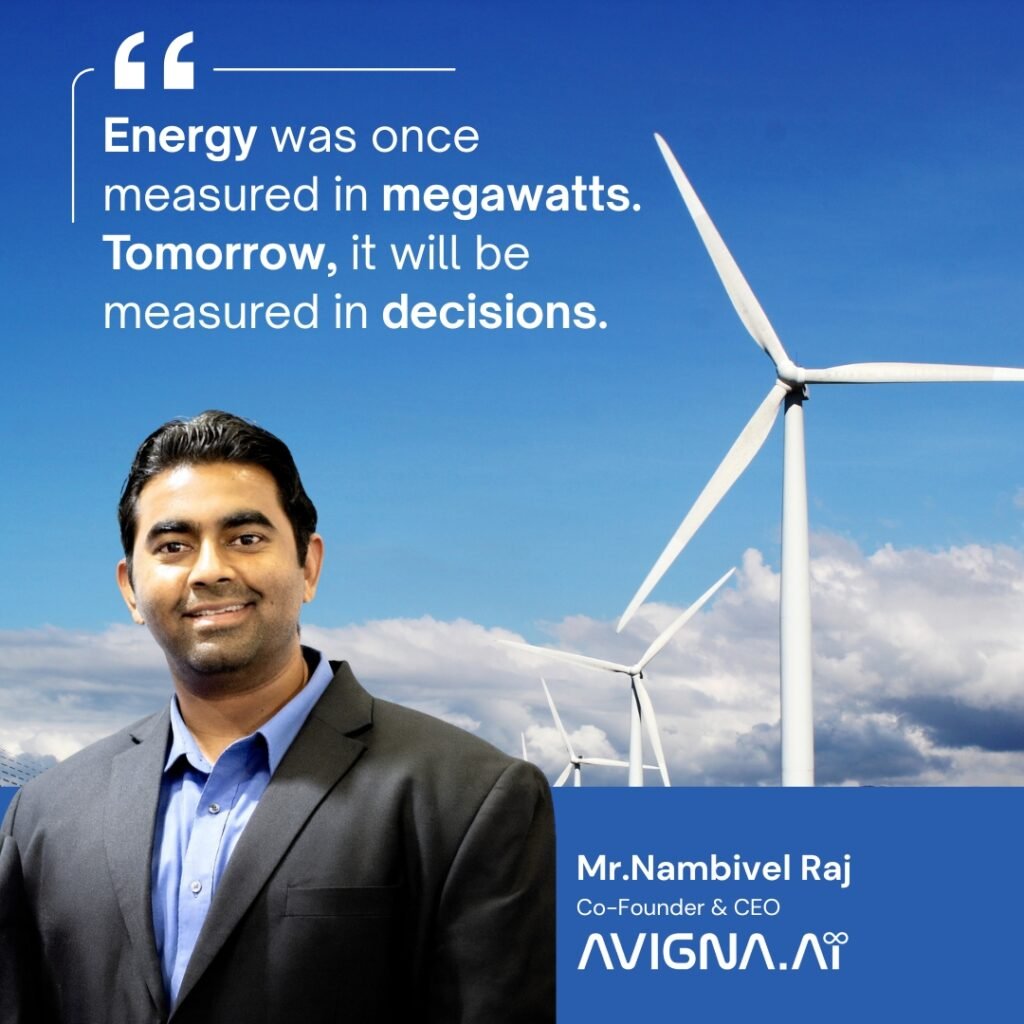
“Energy was once measured in megawatts. Tomorrow, it will be measured in decisions.”
– Nambivel Raj, CEO, Avigna.AI
Cloud Infrastructure Is Only the Starting Point
Cloud platforms have accelerated Industrial IoT adoption by making it easier to connect devices, process telemetry, and scale applications globally.
Technologies such as AWS IoT managed services provide a strong foundation for secure connectivity, device management, and data processing.
But cloud infrastructure alone doesn’t solve business problems.
It doesn’t tell you why a critical asset is becoming less efficient.
It doesn’t recommend the best maintenance strategy.
It doesn’t automatically connect production performance with energy consumption.
Those capabilities require domain expertise, intelligent data models, AI-driven analytics, and workflows designed around business outcomes.
Cloud technology enables Industrial IoT.
Operational intelligence creates measurable value.
Why Production and Energy Should Never Be Viewed Separately
One of the biggest opportunities we see across industrial and energy sectors is the convergence of production monitoring and energy management.
Historically, these functions have been managed independently. However, operational excellence depends on understanding how these factors influence one another.
An Industrial IoT platform to monitor production and energy usage allows organizations to identify inefficiencies that would otherwise remain hidden.
For example, increased energy consumption may not indicate higher production. It may signal equipment degradation, process inefficiencies, or poor asset utilization.
When production and energy data are analyzed together, organizations gain a far more accurate understanding of operational performance and can make faster, more informed decisions.
Build for the Business You’ll Become
Energy infrastructure is changing rapidly.
Renewable assets, battery storage systems, smart buildings, distributed energy resources, and AI-enabled operations are becoming part of the same ecosystem.
The Industrial IoT platform you choose today should be capable of supporting that future.
It should integrate seamlessly with existing enterprise systems, adapt to evolving technologies, and provide the flexibility to incorporate AI, automation, predictive maintenance, and advanced analytics as your business grows.
In my experience, the most successful Industrial IoT implementations aren’t necessarily those with the most sophisticated technology.
They’re the ones that align technology with clear business objectives and create a foundation for continuous operational improvement.
Final Thoughts
The Industrial IoT conversation has matured.
Connectivity is no longer the destination. It’s the starting point.
The organizations that lead the next phase of energy transformation won’t be those with the most connected assets. They’ll be the ones that use operational data to make faster, smarter, and more confident decisions.
Choosing the right Industrial IoT Platform for Energy Infrastructure is ultimately about building a business that is more resilient, more efficient, and better prepared for the future.
The platform is simply the enabler.
Operational intelligence is the real competitive advantage.
Ready to Build Smarter Energy Operations?
Whether you’re modernizing industrial infrastructure, developing connected products, or evaluating an Industrial IoT Platform for Energy Infrastructure, the goal should be the same: transform operational data into measurable business outcomes.
At Avigna.AI, we help energy companies, industrial manufacturers, and equipment OEMs design and implement scalable Industrial IoT and AI solutions, from connected asset monitoring to intelligent platforms that monitor production and energy usage using modern cloud technologies, including AWS IoT managed services.
If you’re planning your next Industrial IoT initiative, let’s discuss how to build an operational intelligence platform that creates lasting business value, not just connected devices. Schedule a free consultation.